Ina Garten-Inspired Roasted Chicken Breasts
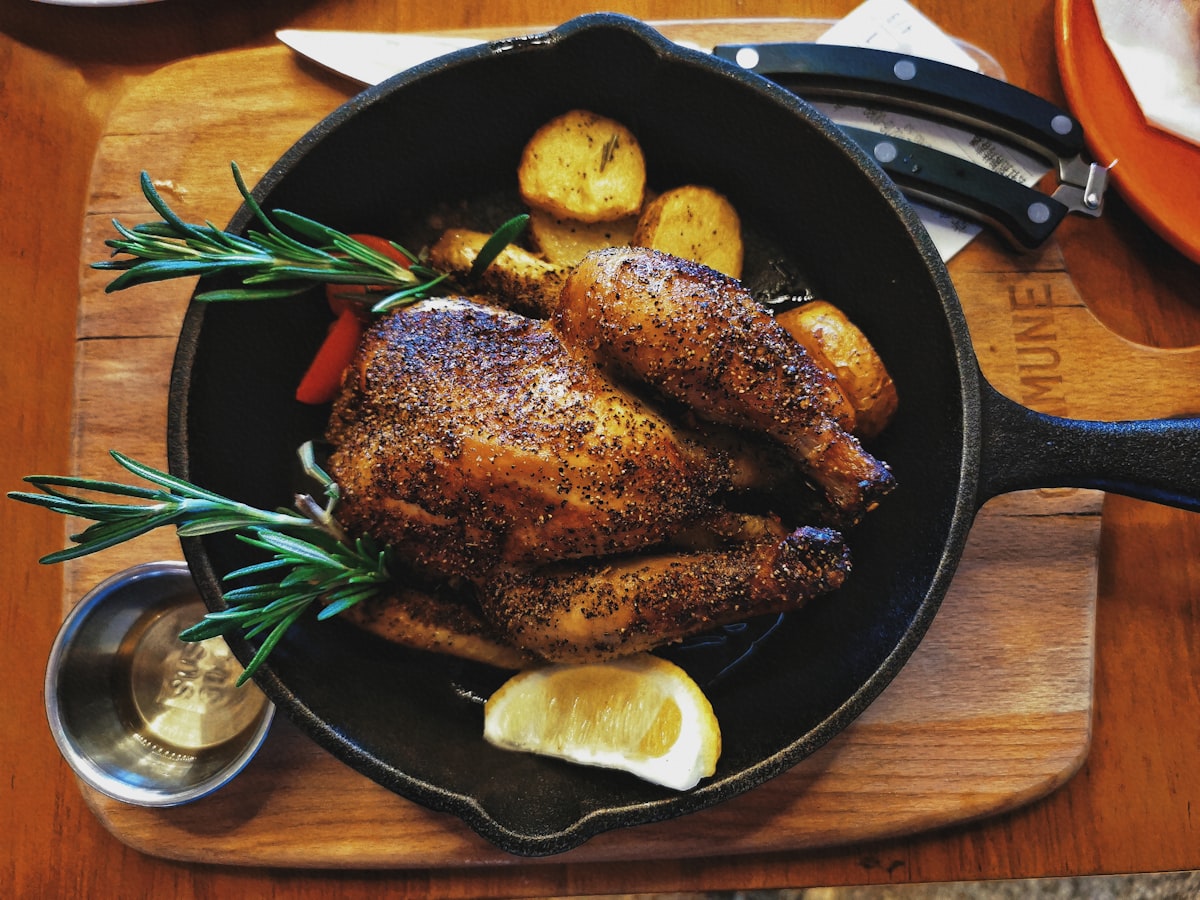
The usual advice for keeping lean meat moist is low and slow. For a bone-in chicken breast it is the wrong way round.
Time above 60°C is what dries out chicken, so the goal is to spend as little of it there as possible. An hour at 160°C keeps the breast in that range far longer than thirty-five minutes at 220°C, and it comes out drier despite the gentler heat. High heat also renders and crisps the skin, which then bastes the meat underneath for the whole roast.
Hot and fast, bone in, skin on. Everything about this cut is designed to survive it.
Jump to the recipe ↓Ina Garten-Inspired Roasted Chicken Breasts
Serves 4 · Main
- Prep
- 10 min
- Cook
- 35 min
- Total
- 1 hr
Easyfew steps, few ingredients
Ingredients
- 4 bone-in, skin-on chicken breasts
- 2 tsp kosher salt
- 1 tsp black pepper
- 2 tbsp olive oil
- 3 garlic cloves, sliced
- 2 tbsp chopped thyme
- 1 lemon, sliced
- 1 onion, thickly sliced
Method
- Salt the breasts and refrigerate uncovered at least, ideally overnight.1 hour
- Take them out before roasting. Heat the oven to 220°C (200°C fan).30 minutes
- Scatter the onion and lemon slices in a roasting tin and sit the breasts on top, skin up.
- Rub with oil, pepper, garlic and thyme.
- Roast , until the thickest part reads 68°C and the skin is deep gold.30–35 minutes
- Rest. It will climb to about 71°C.10 minutes
The bone is not decoration
It conducts heat slowly and shields the underside of the breast from the pan, which is exactly what a boneless breast lacks. It also holds the meat's shape as the muscle contracts. A boneless skinless breast has neither protection, which is why it is the hardest common cut to roast well.
Dry the skin, and salt it early
Salt the breasts and leave them uncovered in the fridge for a few hours or overnight. Salt seasons the meat through and the moving air dries the skin, and dry skin is the only kind that crisps. An hour is worth doing; overnight is noticeably better.
68°C, not 74°C
74°C is the figure for a whole bird, driven by the thigh. A breast held at 68°C for a couple of minutes is equally safe and considerably juicier. Pulling at 74°C means arriving at 77°C after the rest, which is where the texture goes chalky.
Storing
Four days. Leave the meat on the bone until you need it — it dries far more slowly that way. Cold roast breast is much better than reheated.
Questions people ask
Why roast at such a high temperature?
Less total time above 60°C means less moisture lost, and the skin crisps properly.
Can I use boneless breasts?
Yes, but drop to 200°C and start checking at 20 minutes. They have no bone or skin to protect them.
What internal temperature?
68°C, rested. It carries to around 71°C.
Do I need to brine them?
Dry salting overnight does the same job without adding water.
More like this
 Ina Garten-Inspired Beef Bourguignon: Garnish ApartThe onions and mushrooms are cooked separately and added at the end. Simmered in from the start they are what turns it into ordinary stew.
 Ina Garten-Inspired Beef Stroganoff: Not Stewing SteakStroganoff is a fast dish and stewing beef needs hours. Use fillet or sirloin, seared in seconds, or it turns grey and tough.
 Ina Garten-Inspired Beef Tenderloin: Tuck the TailA whole tenderloin tapers from thick to thin. Fold the narrow end under and tie it, or that end is well done before the middle is warm.